
Quick Summary
- CII School of Logistics is an industry–academia initiative associated with CII and Amity University.
- The official Noida-campus listing includes the MBA (Logistics & Supply Chain Management).
- The published duration of the Noida MBA is 2 years.
- The official course page lists a personal interview as the selection process.
- The published first-year semester fee is ₹2.68 lakh for the non-sponsored category and ₹4.02 lakh for the sponsored category; confirm the current fee schedule before payment.
- Listed subjects include supply chain operations, contemporary logistics, business value management, data visualisation and analytics, and global sourcing and procurement management.
- Applicants should verify the latest eligibility requirements, entrance-test conditions, admission status, and deadlines with the university.
- Potential career areas include logistics operations, procurement, inventory management, transport, distribution, supply chain planning, and analytics.
- Programme listings for other campuses or formats should not be assumed to apply to Noida.
- Compare the full programme cost, curriculum, practical exposure, and programme-specific placement information before deciding.
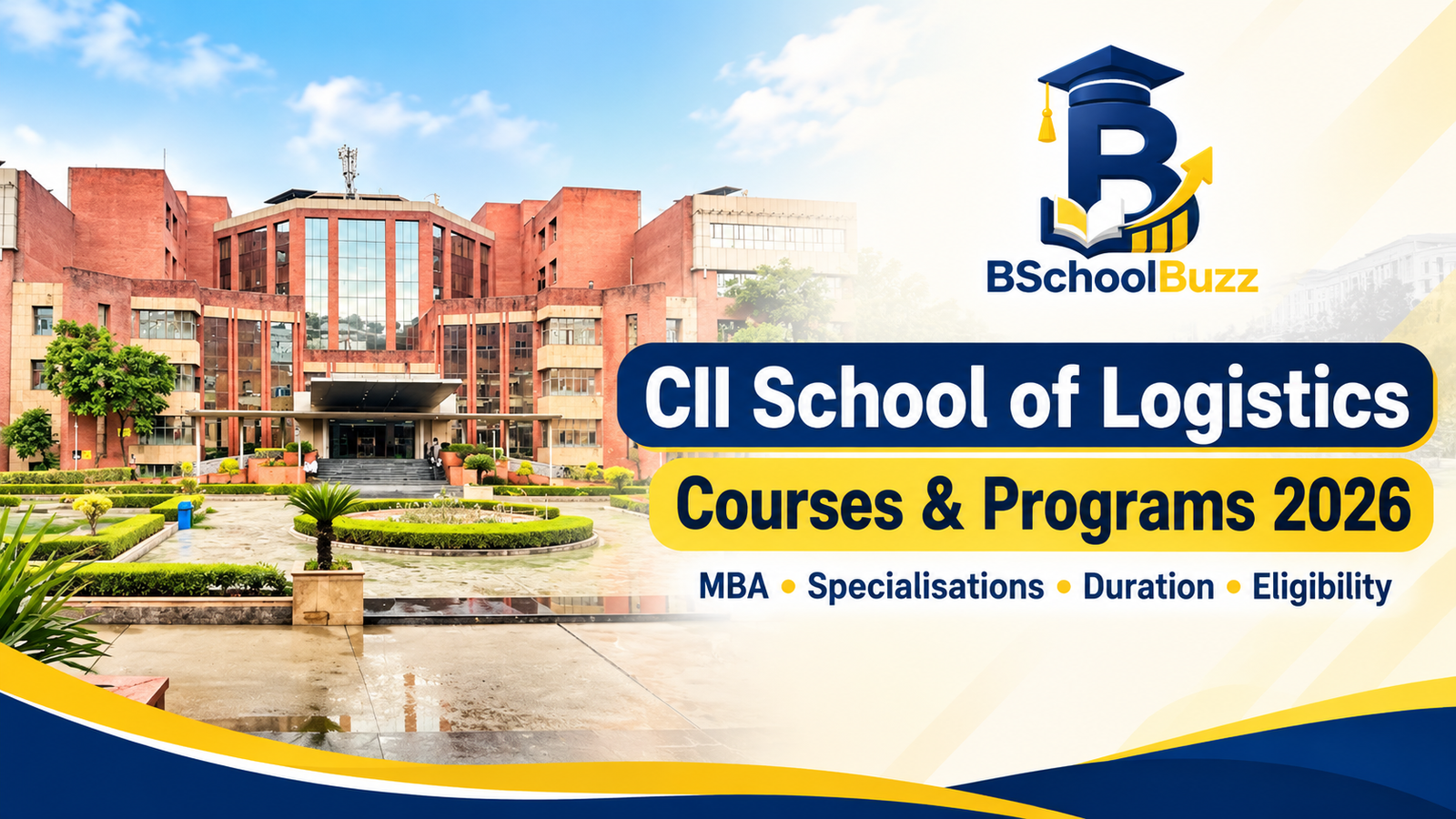
CII School of Logistics, Amity University Noida: Courses & Programs 2026
Choosing a management programme in logistics and supply chain management requires more than comparing course names. Students should understand what they will study, how long the programme takes, which academic qualifications are required, how admission works, and whether the curriculum aligns with their intended career. The CII School of Logistics at Amity University, Noida focuses on management education related to logistics, supply chains, procurement, transport, warehousing, and associated business operations.
For 2026 applicants, the university’s official programme listing identifies an MBA (Logistics & Supply Chain Management) at the Noida campus. The official course page describes a two-year programme and lists a personal interview as the selection process. The details below focus on the Noida campus rather than mixing its information with courses or fees from Amity’s other campuses. Official Noida course page.
Table of Contents
CII School of Logistics at Amity University: Overview
Courses and Programmes Listed
MBA in Logistics & Supply Chain Management
Curriculum and Subjects
Course Duration and Study Structure
Eligibility Criteria for 2026
Admission Process and Selection
Fees and Budget Planning
Career Opportunities After the MBA
Skills Students Should Develop
How to Decide Whether This Programme Is Right for You
Documents to Prepare
Questions to Confirm Before Applying
Conclusion
1. CII School of Logistics at Amity University: Overview
The CII School of Logistics is an industry-focused academic initiative associated with the Confederation of Indian Industry (CII) and Amity University. Its stated purpose is to strengthen the connection between management education and the needs of the logistics and supply chain sector. The university’s overview describes the model as an industry–academia partnership intended to prepare professionals for logistics and supply chain management roles. Official school overview.
Logistics and supply chain management covers the movement of goods, materials, information, and related services from suppliers to businesses and customers. It can involve procurement, transport planning, inventory management, warehousing, distribution, supplier coordination, demand planning, and performance analysis.
A specialised management programme in this area combines general business knowledge with subject-specific learning. Students need to understand not only how goods move, but also how cost, service quality, supplier relationships, data, and business decisions affect the entire operation.
What makes this field different from a general MBA?
A general MBA introduces broad management disciplines such as marketing, finance, economics, organisational behaviour, and business strategy. A logistics-focused MBA retains relevant business foundations while giving additional attention to supply chain and logistics operations.
For example, a company may need to reduce delivery delays without significantly increasing transport costs. Solving that problem could require analysing demand patterns, supplier performance, inventory levels, warehouse locations, transportation choices, and customer expectations. These are the kinds of interconnected business issues that supply chain managers work with.
The value of the programme therefore depends on how well its coursework, projects, practical exposure, and student interests fit the jobs a learner wants to pursue.
2. CII School of Logistics Courses and Programmes Listed
The university’s official CII School of Logistics listing contains several programme names, including postgraduate management options, an executive programme, and doctoral research programmes. However, a programme appearing in the school’s overall listing does not by itself confirm that it is open for admission at the Noida campus in the current cycle.
The following distinction is important for applicants.
| Programme listed by the university | General academic focus | What applicants should confirm |
|---|---|---|
| MBA (Logistics & Supply Chain Management) | Management of logistics and supply chain operations | Current Noida intake, fees, eligibility, and admission availability |
| Master of Business Administration (Logistics) | Logistics-focused management education | Exact campus, current programme title, and whether it is a separate active offering |
| MBA (Supply Chain Management) | Supply chain planning and management | Current campus and admission status |
| MBA (Supply Chain Analytics and Management) | Supply chain decision-making and analytics | Whether the programme is offered at Noida for the intended intake |
| Executive PG Diploma in Supply Chain Management – Weekend Mode | Executive or continuing professional education | Intended audience, entry requirements, schedule, and current availability |
| PhD in Logistics and Supply Chain Management | Doctoral-level research | Research eligibility, intake cycle, mode, and supervisor availability |
The list above reflects programme names shown on the university’s CII School of Logistics programme directory. It should not be read as a guarantee that every listed course is available at Noida for 2026 admissions. The Noida-specific course page is the more relevant reference for the MBA in Logistics & Supply Chain Management.
Which course should a student examine first?
Applicants seeking a full-time postgraduate management degree should begin with the MBA (Logistics & Supply Chain Management) page for the Noida campus. Students who already have professional experience and are looking for a shorter or weekend-format qualification should separately investigate the executive programme. Candidates interested in academic research should examine the PhD requirements rather than treating doctoral study as another MBA specialisation.
Before paying an application fee, verify the exact programme title, campus, academic year, mode of study, and intake status directly with the university.
3. MBA in Logistics & Supply Chain Management
The MBA (Logistics & Supply Chain Management) is the principal Noida-campus programme identified on the official course page. It is a postgraduate management degree designed around business fundamentals and logistics-related subjects. The published duration is two years, and the page lists a personal interview as the selection process. Official programme details.
What does the programme cover?
The course structure published by Amity includes core business subjects and specialised supply chain learning. In the first semester, the listed subjects include:
Economics and Finance Essentials
Marketing and Business Development
Principal Organisational Function
Supply Chain Operations Management
Contemporary Logistics and Supply Chain Management
Professional and Business Communication
A foreign business language option
The second-semester list includes subjects such as Business Value Management, Data Visualization and Analytics, and Global Sourcing and Procurement Management. The exact curriculum can be updated by the university, so applicants should consult the current course page and programme documents for the complete semester-wise structure.
Why are general management subjects included?
Logistics professionals do not work in isolation from the rest of a business. Procurement decisions affect working capital; inventory policies influence customer service and storage costs; marketing decisions can change demand; and transport choices can affect both operating expenses and delivery commitments.
Subjects such as economics, finance, marketing, and organisational functions help students understand these connections. Specialised modules then apply management concepts to supply chain activities.
Who may benefit from this MBA?
The programme may be relevant to graduates who want to begin a career in logistics, supply chain operations, procurement, warehousing, distribution, or related business functions. It may also suit students from engineering, commerce, management, economics, or other academic backgrounds who want to move towards operations-oriented roles, provided they meet the university’s current eligibility requirements.
An applicant does not need to assume that the degree automatically leads to a particular job title or salary. Career outcomes depend on the candidate’s skills, experience, performance, internship opportunities, hiring conditions, and employer requirements.
4. Curriculum and Subjects
The curriculum is a central factor when comparing CII School of Logistics courses. Applicants should look beyond the programme title and check the actual subjects, assessment methods, projects, and practical exposure offered during the degree.
Core business subjects
Core management subjects help students develop an understanding of how organisations operate. Economics and finance can support decisions about costs, budgets, and business performance. Marketing and business development can help learners understand demand, customer expectations, and commercial relationships. Organisational subjects introduce the way teams, processes, and business functions work together.
These topics matter in supply chain roles because operational decisions rarely affect only one department.
Logistics and supply chain operations
Supply chain operations management focuses on the activities required to coordinate materials, products, services, and information. Depending on the course content, this field may include planning, supplier coordination, inventory control, distribution, and operational performance.
Contemporary logistics and supply chain management provides a specialised view of the sector. Students should use the official curriculum to confirm which themes are covered in the current intake and how deeply each topic is taught.
Procurement and global sourcing
Procurement involves identifying requirements, evaluating suppliers, negotiating terms, managing purchasing processes, and monitoring supplier performance. Global sourcing adds complexity because organisations may work across borders, currencies, transport routes, regulations, and delivery timelines.
Students interested in procurement should check whether the programme includes practical supplier evaluation, sourcing cases, negotiation exercises, or projects. The official Noida course page lists Global Sourcing and Procurement Management among its second-semester subjects.
Data visualisation and analytics
Supply chain decisions increasingly depend on data. A manager may need to understand stock levels, delivery performance, demand trends, order fulfilment, or supplier reliability. Data visualisation can help convert operational information into charts and dashboards that support decisions.
Students should confirm the software, tools, and level of quantitative analysis used in the programme rather than assuming that a course title guarantees training in a particular platform.
Communication and professional skills
Logistics work involves coordination across suppliers, warehouses, transport providers, finance teams, sales teams, and customers. Clear communication can help resolve delays, explain trade-offs, and keep stakeholders informed.
The published curriculum also lists professional and business communication and a foreign business language option. Applicants should check the current rules for language selection, evaluation, and availability.
How to assess curriculum quality
When reviewing the programme, look for answers to these questions:
Are the specialised subjects relevant to the jobs you want?
Does the course include case studies, projects, simulations, or industry assignments?
How are analytics and technology incorporated?
Are internships or industry interactions described in official programme materials?
What are the assessment methods for specialised modules?
Does the curriculum include opportunities to apply concepts to practical business problems?
Do not rely on a general promise of industry exposure. Ask the university which activities are part of the current cohort’s academic plan and whether participation is guaranteed or subject to selection.
5. Course Duration and Study Structure
The official Noida programme page states that the MBA (Logistics & Supply Chain Management) has a two-year duration. A two-year management degree typically involves multiple semesters, but the current programme page or academic regulations should be used to confirm the exact semester structure, credit requirements, examination schedule, and any project or internship requirements.
| Programme detail | Published information |
|---|---|
| Programme | MBA (Logistics & Supply Chain Management) |
| Campus | Noida |
| Duration | 2 years |
| Selection process shown on course page | Personal interview |
| Curriculum | Core management subjects and logistics/supply chain modules |
| Current semester schedule | Confirm using the latest official course structure |
What should students understand about duration?
The stated duration is the standard programme period, not a promise that every student will complete all requirements on the same date. Academic progression may depend on attendance, examinations, credits, projects, university regulations, and other requirements applicable to the cohort.
Students who need to plan accommodation, travel, education loans, or employment transitions should obtain the current academic calendar and confirm when classes begin, when examinations are scheduled, and whether internships or projects affect the timetable.
Is the programme suitable for working professionals?
The Noida course page identifies the MBA as a two-year programme but does not, by itself, establish that this specific offering is a weekend or part-time course. Applicants who intend to continue working should verify the mode of delivery and class schedule directly with the admissions office. Do not assume that the weekend executive diploma and the full-time MBA follow the same format.
6. Eligibility Criteria for 2026
Eligibility is one of the most important details to confirm before applying. The university’s course page provides the programme-specific eligibility information, and applicants should read the current rules for the non-sponsored or sponsored category that applies to them. The public page identifies a bachelor’s degree as part of the requirements, but the complete criteria and category-specific conditions should be checked on the live course page before submission. Official Noida course details.
Academic qualification
Applicants should confirm the required undergraduate qualification, minimum aggregate marks, and any conditions for students awaiting final-year results. They should also check whether the university specifies any subject, degree-recognition, or documentation requirements.
A candidate should not rely solely on the eligibility of a different Amity campus. Similar programme titles can have different published conditions across universities or locations.
Minimum marks and category rules
The applicable minimum marks should be taken from the current Noida course page or the relevant admission prospectus. If the university publishes separate conditions for sponsored and non-sponsored applicants, review the correct category before assessing eligibility. Do not assume that the categories have identical academic or fee conditions.
Entrance examination requirements
The Noida course page lists a personal interview as the selection process. Applicants should confirm whether a separate entrance-test score is required, accepted, or considered for the current intake, and whether any additional assessment applies. The fact that an exam is accepted for another management programme does not automatically mean it is required for this course.
Can final-year students apply?
Final-year candidates should verify the university’s current rules for provisional applications, result submission, and document deadlines. If provisional applications are permitted, the offer may remain subject to meeting the required academic conditions within the stated period.
Eligibility checklist
Before starting the application, check that you can answer the following:
Does your undergraduate qualification meet the published requirement?
Do your marks meet the applicable minimum?
Are you applying under the correct admission category?
Are final-year applicants eligible under the current rules?
Is an entrance examination score required or considered?
Can you provide the original marksheets, degree documents, and identity documents when requested?
If any condition is unclear, obtain written clarification from the admissions office before paying fees or accepting an offer.
7. Admission Process and Selection
The Noida course page lists a personal interview as the selection process for the MBA (Logistics & Supply Chain Management). Applicants should use the university’s live admissions portal for the current application steps, required documents, deadlines, and any additional assessment conditions.
Step 1: Check the current programme page
Begin with the official Noida course page. Confirm that the programme is accepting applications for the intended intake, and review the published eligibility, duration, selection process, and fee details.
Step 2: Complete the application
Follow the official application instructions and enter your academic and personal information accurately. Ensure that your programme and campus selection are correct. Keep a copy of the submitted application and payment acknowledgement, where applicable.
Step 3: Prepare supporting documents
Collect academic marksheets, degree or provisional documents, identity proof, photographs, and any additional certificates requested by the university. Requirements may differ depending on whether the applicant is a recent graduate, a final-year student, or an applicant with work experience.
Step 4: Attend the selection stage
Since the official course page lists a personal interview, applicants should be prepared to discuss their academic background, reasons for choosing logistics and supply chain management, career goals, communication skills, and understanding of the field.
The university should confirm whether any further evaluation applies to the relevant intake.
Step 5: Review the offer and fee conditions
If selected, read the offer letter carefully. Check the programme name, campus, admission category, payment deadline, fee schedule, refund rules, and conditions that must be met before enrolment.
Step 6: Complete enrolment
Submit the required documents and payments through the official channels within the specified deadlines. Keep copies of receipts and all written communications.
How should applicants prepare for the interview?
A useful preparation plan includes:
Explaining why logistics and supply chain management interests you.
Connecting your academic background to the programme.
Understanding basic concepts such as procurement, inventory, transport, warehousing, and distribution.
Describing a real-world supply chain problem and how you would approach it.
Being clear about your short-term career interests.
Reviewing the current course structure and explaining why its subjects fit your goals.
There is no need to claim expertise in every logistics topic. A clear understanding of your interests, willingness to learn, and ability to reason through practical problems can help you communicate your motivation.
8. Fees and Budget Planning
Fees are a key part of deciding whether a postgraduate programme is financially practical. The official Noida course page displays a first-year non-sponsored semester fee of ₹2.68 lakh and a first-year sponsored semester fee of ₹4.02 lakh. These are published figures on the course page, but students should confirm the applicable amount and current fee schedule for their admission year before making a payment. Official fee details.
| Fee item | Published information | What to confirm |
|---|---|---|
| First-year non-sponsored semester fee | ₹2.68 lakh | Whether this is the current applicable fee and how many instalments are payable |
| First-year sponsored semester fee | ₹4.02 lakh | Eligibility and conditions for the sponsored category |
| Second-year fee | Confirm from the current official fee schedule | Do not assume it is identical to the first-year fee |
| Hostel and mess | Confirm separately | Room type, meals, deposits, and billing period |
| One-time or additional charges | Confirm from the offer and fee documents | Registration, security, examination, or other applicable charges |
| Refund or withdrawal deductions | Check the current official policy | Deadlines, deductions, and required procedure |
Why should students avoid calculating the total from one semester figure?
A semester fee is not necessarily the same as an annual fee or total programme fee. The number of payable instalments, any year-wise change, category conditions, and additional charges can affect the total amount. A student should use the complete official fee schedule rather than multiplying a single figure without confirming the payment structure.
Build a realistic education budget
A practical budget should include more than tuition. Students may need to plan for:
Tuition and mandatory university charges.
Accommodation, if required.
Meals and everyday expenses.
Local transport.
Books, learning materials, and equipment.
Personal expenses.
Travel to and from campus.
Any applicable deposits or one-time charges.
Separate recurring expenses from one-time payments. This makes it easier to compare the total cost of studying at Noida with other programmes and to plan an education loan or family budget.
What about scholarships and education loans?
Students should review the university’s current scholarship and financial-assistance information to determine whether they qualify. Eligibility can depend on academic performance, admission category, documentation, deadlines, and the rules in force for the relevant intake. Do not assume that a scholarship applies automatically or that an award covers every fee component.
If using an education loan, ask the lender which costs are eligible for financing, which documents are required, how disbursements are made, and when interest begins to accrue. Compare the likely repayment obligation with realistic early-career earnings rather than relying on the highest salary reported by any institution.
Before paying fees
Ask the admissions office to confirm the complete fee for the full programme, the payment dates, the applicable category, hostel charges if needed, refundable deposits, and the official withdrawal/refund policy. Save the fee schedule and payment receipts for your records.
9. Career Opportunities After an MBA in Logistics & Supply Chain Management
A specialised MBA can help prepare students for management-oriented work in supply chain and logistics, but the roles available to an individual depend on their skills, prior experience, employer needs, and hiring conditions. The programme title alone does not guarantee a particular job, placement, or salary.
Logistics and operations
Logistics-related roles may involve coordinating shipments, monitoring delivery performance, working with transport providers, supporting warehouse operations, and improving the movement of goods. Early-career responsibilities may be operational, with broader planning or leadership responsibilities developing through experience.
Supply chain planning
Supply chain planning connects demand, inventory, sourcing, production, and distribution. Roles in this area may involve reviewing demand forecasts, tracking stock availability, identifying supply risks, and coordinating plans across business functions.
Students who enjoy structured problem-solving and working with data may want to explore this pathway.
Procurement and sourcing
Procurement professionals help organisations source goods and services while considering quality, price, reliability, and delivery requirements. Work can include supplier research, purchase coordination, performance monitoring, and support for negotiations.
A student interested in procurement should develop communication, analytical, commercial, and relationship-management skills.
Warehousing and inventory management
Warehouse and inventory functions focus on stock accuracy, storage, order fulfilment, space utilisation, and process efficiency. Depending on the employer, the work may involve warehouse systems, inventory reports, coordination with transport teams, and continuous improvement.
Transport and distribution
Transport and distribution roles can involve route planning, carrier coordination, delivery scheduling, freight documentation, cost control, and service-level monitoring. These jobs require attention to operational detail and the ability to respond to delays or changing requirements.
Supply chain analytics
Analytical roles may support decisions through dashboards, reporting, performance indicators, demand analysis, inventory analysis, and supplier or delivery metrics. Students interested in this area should build spreadsheet skills, quantitative reasoning, data interpretation, and familiarity with relevant analytics tools.
Sectors to investigate
Logistics and supply chain professionals can be relevant to a range of industries, including:
Manufacturing
Retail and e-commerce
Consumer goods
Automotive
Pharmaceuticals and healthcare distribution
Food and agriculture supply chains
Freight forwarding and transportation
Warehousing and third-party logistics
Import and export operations
Technology and business services supporting supply chain functions
The exact opportunities depend on each employer’s requirements. Some roles may require specialist software knowledge, operational experience, certifications, or familiarity with industry regulations.
How can students strengthen their employability?
Students can improve their readiness by developing practical capabilities alongside academic knowledge. Useful steps include:
Build strong spreadsheet and data-analysis skills.
Learn how inventory, procurement, transportation, and distribution processes work together.
Practise explaining business problems using evidence.
Seek relevant internships or project work where available.
Develop written communication and stakeholder-management skills.
Learn how to interpret operational measures such as delivery performance, stock availability, lead time, and cost.
Review job descriptions to identify the skills employers repeatedly request.
Before enrolling, ask the university about internship arrangements, career services, employer engagement, and the most recent programme-specific placement information. Do not substitute general university placement claims for verified results from the exact programme.
10. Skills Students Should Develop
The course can provide management concepts, but students should also build the skills needed to apply those concepts to real operations.
Analytical thinking
Supply chain problems often involve trade-offs. Lower inventory can reduce holding costs but may increase the risk of stockouts. Faster transport can improve delivery speed but may increase cost. Analytical thinking helps students compare options and explain why a decision makes sense.
Communication and coordination
Supply chain work requires regular coordination with people who have different priorities. Clear updates, accurate documentation, and professional communication help reduce misunderstandings and support timely decisions.
Commercial awareness
Managers need to understand how operational choices affect cost, revenue, service quality, and customer satisfaction. A good decision is not always the cheapest immediate option; it may be the option that offers the best overall result within the business’s constraints.
Technology awareness
Students should become comfortable working with structured data and business systems. The precise tools required will vary by employer, so students should review relevant job descriptions and use internships or projects to gain practical exposure.
Adaptability and problem-solving
Delays, supplier issues, demand changes, and capacity constraints can affect supply chains. Being able to identify the problem, gather facts, consider alternatives, and communicate a practical response is an important professional capability.
11. How to Decide Whether This Programme Is Right for You
The MBA may be worth investigating if you want a management qualification with a clear focus on logistics and supply chain operations. It may be less suitable if your main objective is a different specialisation and you do not want to focus on operational business functions.
Use the following questions to assess fit.
| Decision factor | Questions to ask yourself |
|---|---|
| Career direction | Do I want to work in logistics, procurement, operations, planning, distribution, or a related field? |
| Academic interest | Am I comfortable with analytical, operational, and business-oriented subjects? |
| Curriculum | Do the published subjects match the skills I want to acquire? |
| Practical exposure | What internships, projects, or industry activities are confirmed for my cohort? |
| Cost | Can I manage the full programme cost, including living expenses if applicable? |
| Location | Is the Noida campus practical for my travel or accommodation needs? |
| Eligibility | Do I meet the current requirements for the applicable admission category? |
| Career evidence | Can I review credible, programme-specific information about placements and career support? |
Compare programmes carefully
When comparing this MBA with other management degrees, use the same factors for each institution. Compare total fees rather than only the first payment; confirm the exact campus; check the curriculum subject by subject; and distinguish official placement data from promotional statements.
It is also useful to examine the career roles listed in recent job advertisements. If the jobs that interest you consistently require analytics, procurement, transport operations, or inventory knowledge, compare those requirements with the course curriculum and opportunities for practical experience.
12. Documents to Prepare
The exact document list must come from the current admissions portal, but applicants can begin organising commonly requested academic and identity records.
| Document category | Examples to keep ready |
|---|---|
| Identity | Government-issued identity proof, as specified by the university |
| Academic records | Class 10 and 12 marksheets or certificates, where requested |
| Undergraduate records | Semester marksheets and degree/provisional certificate, as applicable |
| Final-year status | Current marksheets or an enrolment/provisional document if required |
| Application record | Submitted application and acknowledgement |
| Payment record | Application or admission fee receipt, where applicable |
| Photographs | Recent photographs in the prescribed format |
| Additional records | Any category, scholarship, work-experience, or other documents requested by the university |
Do not upload sensitive documents to unofficial websites or send payments to unverified accounts. Follow the official portal’s instructions and retain copies of all submissions.
13. Questions to Confirm Before Applying
Before accepting an offer for the CII School of Logistics MBA at Amity University Noida, get clear answers to the following questions:
Is the MBA (Logistics & Supply Chain Management) accepting applications for my intended intake?
What is the complete eligibility requirement for my admission category?
Is a separate entrance-test score required, accepted, or considered?
What is the full fee for both years, including mandatory charges?
What are the payment deadlines and refund rules?
What is the current semester-wise curriculum?
What practical projects, internships, or industry interactions are part of the programme?
What is the confirmed class schedule and academic calendar?
What career support is available to students in this specific programme?
Can the university share recent placement information for this programme and explain how the figures were calculated?
These questions can prevent confusion caused by relying on outdated brochures, information for another campus, or generic MBA descriptions.
Conclusion
The CII School of Logistics, Amity University Noida is an option for students interested in postgraduate management education focused on logistics and supply chain management. The official Noida course page identifies the MBA (Logistics & Supply Chain Management), lists a two-year duration, and names a personal interview as the selection process. Its published curriculum includes core management subjects alongside specialised learning in supply chain operations, logistics, sourcing, procurement, and analytics.
The best decision should be based on the current official eligibility criteria, complete programme fee, detailed semester structure, practical learning opportunities, and credible programme-specific career information. Since fees and admission requirements can change between academic cycles, applicants should confirm the latest details directly with Amity University before submitting an application or paying an admission fee.
Key Takeaways
Check the exact campus: Confirm that your application is for CII School of Logistics at Amity University, Noida.
Verify the programme title: The official Noida course page lists MBA (Logistics & Supply Chain Management).
Review the full eligibility criteria: Check academic requirements and category-specific conditions for the current admission cycle.
Prepare for the interview: The official course page lists a personal interview as the selection process.
Confirm the total fee: Do not calculate the complete programme cost from a single semester figure without checking the full fee schedule.
Review the actual curriculum: Look for subjects relevant to your intended career, including procurement, operations, logistics, and analytics.
Ask about practical learning: Confirm internship, project, and industry-engagement arrangements for your cohort.
Assess career fit: Explore job descriptions and the skills employers expect in logistics and supply chain roles.
Check current admission status: Programme listings do not necessarily mean applications are open for every campus or intake.
Use official sources before payment: Confirm fees, deadlines, eligibility, and refund conditions directly with Amity University.
Frequently Asked Questions
What courses are offered by CII School of Logistics, Amity University Noida?
The university’s programme directory lists several logistics and supply chain-related programmes. The official Noida course page specifically lists the MBA (Logistics & Supply Chain Management). Confirm the current campus-wise programme list and admission status before applying.
What is the duration of the MBA in Logistics & Supply Chain Management at Amity University Noida?
The official Noida course page lists the programme duration as two years. Students should check the current academic calendar and programme regulations for the semester structure and academic requirements.
What is the eligibility for CII School of Logistics, Amity University Noida?
Applicants must meet the eligibility requirements published for the specific programme and admission category. Check the official Noida course page for the current degree, minimum-mark, and other applicable conditions.
What is the admission process for the MBA in Logistics & Supply Chain Management?
The official Noida course page lists a personal interview as the selection process. Applicants should check the live admission portal for application instructions, documents, deadlines, and any additional requirements for their intake.
What is the MBA fee at CII School of Logistics, Amity University Noida?
The official course page displays a first-year non-sponsored semester fee of ₹2.68 lakh and a sponsored semester fee of ₹4.02 lakh. Confirm the current applicable fee, the number of instalments, second-year charges, and additional costs directly with the university.
Which subjects are taught in the MBA in Logistics & Supply Chain Management?
The published curriculum includes subjects such as Supply Chain Operations Management, Contemporary Logistics and Supply Chain Management, Business Value Management, Data Visualization and Analytics, and Global Sourcing and Procurement Management. Consult the latest course structure for the full semester-wise list.
Is the MBA in Logistics & Supply Chain Management a two-year programme?
Yes. The official Noida course page states a duration of two years. Applicants should confirm the current academic schedule and completion requirements for their batch.
What career options are available after an MBA in Logistics and Supply Chain Management?
Potential career areas include logistics operations, supply chain planning, procurement, inventory management, warehousing, transportation, distribution, and supply chain analytics. Actual job opportunities depend on the candidate’s skills, experience, and employer requirements.
Does CII School of Logistics offer a PhD in Logistics and Supply Chain Management?
The university’s overall CII School of Logistics directory lists doctoral programmes in Logistics and Supply Chain Management. Applicants should confirm the current Noida research intake, eligibility, study mode, and admission dates before applying.
Where can I verify the latest CII School of Logistics, Amity University Noida admission details?
Use the official [Amity University Noida course page](https://www.amity.edu/course-details.aspx?cfn=xM7Tn%2F7vxGV56mlLcALWLQ%3D%3D&fd=FzNymoX3dH0D) and the university’s official admissions portal. Confirm the programme, campus, eligibility, fees, selection process, and deadlines for the intended intake.
Ask a question
Still confused? Leave your question and our team will help you.